


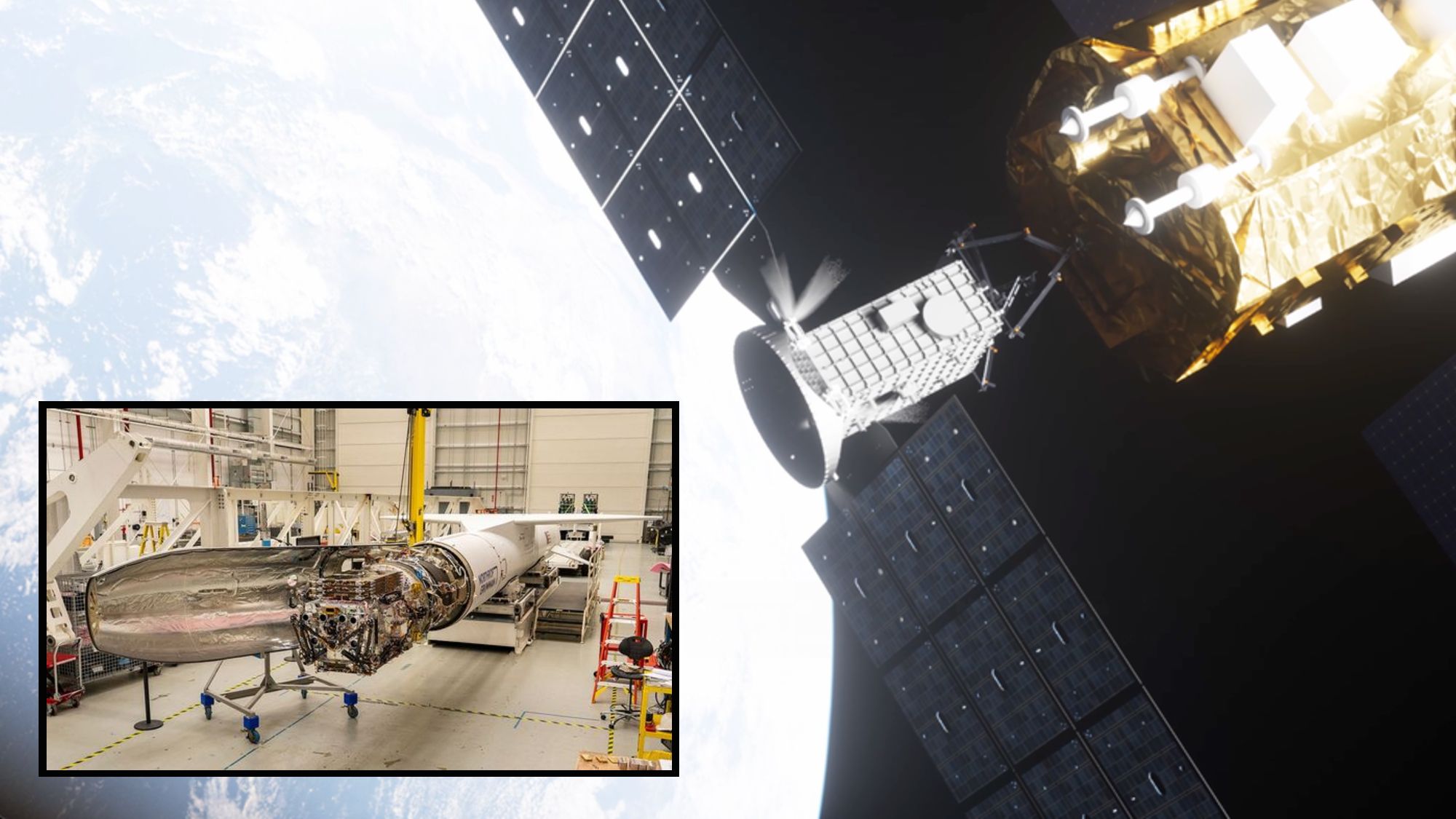
NASA’s Satellite Rescue Mission Faces Challenges
NASA’s latest effort to rescue a satellite is encountering significant difficulties. The agency launched the Swift Boost mission on July 3, deploying a specialized spacecraft named LINK into low Earth orbit. This mission utilized the final flight of Northrop Grumman’s air-launched Pegasus XL rocket. LINK was designed to connect with NASA’s Swift observatory, a successful scientific satellite tasked with detecting gamma-ray bursts, some of the universe’s most energetic phenomena.
However, just weeks post-launch, LINK has begun to exhibit problems. According to NASA’s update on July 28, the spacecraft has experienced issues with attitude control, causing it to spin and resulting in sporadic communications. Despite these challenges, NASA reports that the rest of the spacecraft is functioning normally.
Preliminary analyses indicate that two of LINK’s three reaction wheels are non-operational, along with a noted loss of functionality in its cold gas thruster system. This situation is somewhat ironic, as the Swift observatory itself faced similar issues with its reaction wheels in 2022, which led to it being placed in safe mode.
Mission teams are now working to utilize LINK’s electric propulsion system to stabilize the spinning and regain control. If successful, NASA and Katalyst Space Technologies, the company that built LINK, will need to assess whether the mission can proceed as initially planned.
The Swift observatory, officially known as the Neil Gehrels Swift Observatory, was launched in 2004 at a cost of $250 million. The Swift Boost mission itself cost NASA $30 million. Over its 22-year mission, Swift has contributed significantly to astrophysics, including the identification of a gamma-ray burst in 2022, dubbed « BOAT » for « Brightest of All Time, » marking it as the most powerful space explosion ever recorded.
Source: Space.com